Hazard perception practice: how to pass first time
Hazard perception practice: how to pass first time

Start with the Gov, run the free tutorial clip, then move immediately to full 14-clip mock runs on a realistic paid platform. That single shift, from watching random clips to timed end-to-end mocks, is what separates candidates who scrape through from those who pass comfortably.
The numbers are fixed and worth knowing cold before you sit down to practise:
- 14 video clips in the test, lasting roughly 15 minutes in total
- 15 scorable developing hazards across those clips (one clip contains two)
- Pass mark: 44 out of 75 — and you must pass both the multiple-choice and hazard perception sections on the same day to earn your certificate
- Each developing hazard scores 0–5 points ; earlier correct clicks score higher
Start here: GOV.UK free practice clips, one realistic paid app with full mock tests, and a desktop browser for exam parity.
A developing hazard, as GOV.UK defines it, is anything that would cause a driver to change speed or direction. Not every movement on screen qualifies. That distinction matters more than most candidates realise.
Key takeaways
Consistent full-mock practice on DVSA-supplied clips, combined with early-recognition drills and a clear score target of 50/75, gives you the best chance of clearing the 44/75 pass mark on test day.
| Point | Details |
|---|---|
| Pass mark and test format | Score at least 44/75 across 15 developing hazards in 14 clips; pass both theory sections on the same day. |
| Click early, not late | The scoring window opens at 5 points and closes as the hazard develops; waiting for certainty costs points. |
| Avoid patterned clicking | Rhythmic or rapid clicking triggers the inappropriate-response algorithm and scores the clip zero. |
| Practise full mocks on desktop | Run complete 14-clip timed tests on a desktop to match exam conditions and build concentration endurance. |
| Costello's Driving School | Instructor-led lessons across Essex, Suffolk, and East London reinforce real-world hazard awareness alongside test technique. |
Table of Contents
- Where to practise hazard perception in the UK
- How does DVSA hazard perception scoring work?
- A practical practice plan and test-day strategy
- Common mistakes in hazard perception practice and how to fix them
- How to choose the right hazard perception practice test
- How to track your progress and set score goals
- Why full mocks beat endless random clips
- Costello's Driving School supports your full theory preparation
- Sources
Where to practise hazard perception in the UK
The official starting point is the GOV.UK practice portal, which provides a short tutorial video and three free practice clips. These are genuinely useful for learning the format and the click interface, though GOV.UK is clear that the practice clips are not the same ones used in the real test. Think of them as a calibration tool, not a revision library.
Beyond the official clips, the two most widely used UK platforms are:
- Theory Test Online (theory-test-online.co.uk): Uses DVSA-supplied clips and offers full 14-clip mock tests with score breakdowns. The clip labelling is transparent, which matters when you want to know whether you are practising on genuine DVSA footage or a CGI simulation.
- TheoryPass (theorypass.co.uk): Provides full mock tests, clip-by-clip feedback, and clearly distinguishes between DVSA-supplied and simulated clips. Paid subscription, with a free trial available.
The DVSA also published an introductory hazard perception video on YouTube that walks through the format before you attempt any clips.
Why clip realism matters: CGI and simulated clips can train you to spot artificial hazards that behave differently from real-world footage. If a practice site does not label its clip source, treat it with caution.

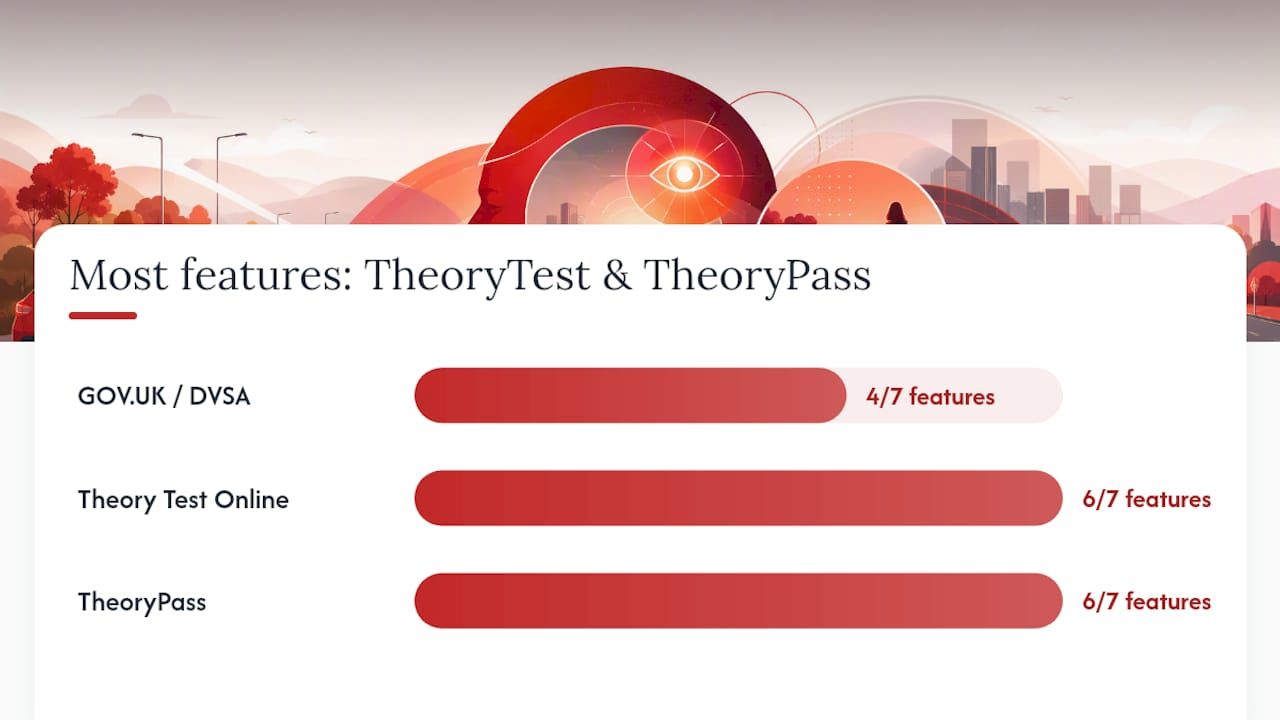
| Feature | GOV.UK / DVSA free clips | Theory Test Online | TheoryPass |
|---|---|---|---|
| Clip realism | DVSA-supplied | DVSA-supplied | DVSA-supplied + labelled simulated |
| Free vs paid | Free (3 clips + tutorial) | Paid (free trial available) | Paid (free trial available) |
| Full 14-clip mock tests | No | Yes | Yes |
| Clip-by-clip feedback | No | Yes | Yes |
| Inappropriate-click detection | No | Yes | Yes |
| Desktop compatible | Yes | Yes | Yes |
| Mobile compatible | Yes | Yes (reduced fidelity) | Yes (reduced fidelity) |
Platform advice: use a desktop or laptop wherever possible. The official test is taken on a desktop computer, and practising on a small touchscreen trains a different click response. Mobile apps are fine for short drills on the go, but run your full mock tests on a desktop.
How does DVSA hazard perception scoring work?
Each of the 15 developing hazards carries a maximum of 5 points, giving a total of 75 available. The pass mark is 44. The scoring is graduated across a response window, and the window closes as the hazard develops.
Here is how a single hazard's scoring window works in practice:
- 5 points: You click at the earliest moment the hazard begins to develop, before it becomes obvious.
- 4 points: You click slightly later, as the hazard becomes more apparent.
- 3 points: You click once the hazard is clearly forming.
- 2 points: You click as the hazard is well underway.
- 1 point: You click very late, just before the window closes.
- 0 points: You miss the window entirely, or your clicking pattern triggers the inappropriate-response algorithm.
The clip that contains two developing hazards is scored independently for each one. Missing the first does not affect your score on the second.
Scoring fact: GOV.UK confirms that each developing hazard scores up to 5 points. With 15 hazards across 14 clips, the maximum is 75 and the pass mark is 44.
The inappropriate-response algorithm is the rule most candidates do not know exists until they fail. A DSA Freedom of Information response confirms that clicking in a repetitive pattern, or making a large number of rapid clicks in a short period, causes the entire clip to score zero. The system treats this as an attempt to game the test. Clicking rhythmically every two seconds, or hammering the mouse when you are unsure, will wipe out your score for that clip regardless of whether you clicked at the right moment.
The practical rule: click once when you see a hazard developing, and click again only if the hazard continues to develop in a new way.
A practical practice plan and test-day strategy
A structured approach over one to two weeks produces far more reliable results than sporadic clip-watching. Here is a schedule that works:
- Days 1–2 (orientation): Watch the DVSA tutorial clip on GOV.UK. Run the three free practice clips. Note your click timing and whether you are clicking early or waiting for certainty.
- Days 3–4 (short-clip drills): Use a paid platform to run individual clips, pausing after each to review the score and the feedback. Focus on identifying the earliest sign of a hazard, not the obvious one. RAC Drive recommends watching for brake lights, pedestrians stepping towards the road, and vehicles pulling out as early indicators.
- Days 5–7 (first full mocks): Run complete 14-clip tests under timed conditions. Do not pause between clips. Log your total score and note which clip types cost you points.
- Week 2 (consolidation): Alternate between targeted short-clip drills on your weak hazard types and full mock runs. Aim for at least three full mocks before booking your theory test. New Driver Hub suggests moving to full mocks only once your short-clip timing is consistent.
Combining both theory sections: the multiple-choice and hazard perception sections are sat on the same day. Build your revision plan so both are strong simultaneously. The complete guide to passing your test covers how to structure combined revision if you want a single resource for both parts.
On test day: use the DVSA tutorial at the start of the hazard perception section, even if you have seen it before. It resets your focus. After each clip ends, take one slow breath before the next begins. This is a mental reset, not a pause, and it prevents a poor clip from affecting your concentration on the next one.
Pro Tip: When a hazard keeps developing, for example a cyclist who wobbles and then moves into your path, click once when the wobble begins and once more when the direction change becomes clear. Two deliberate clicks on a genuinely evolving hazard are legitimate. Rhythmic clicking is not.
Common mistakes in hazard perception practice and how to fix them
Most candidates who fail do so for one of five reasons, and every one of them is correctable with the right practice habit. Practical guidance on spotting suspicious vehicle behaviour and registration issues can help develop early recognition skills, as explained in the Vehicle Registration Security Guide for UK Drivers.
- Rhythmic clicking: Clicking at regular intervals to cover the scoring window. The DSA's FOI response confirms this triggers the inappropriate-response algorithm and scores the clip zero. Fix: practise on platforms that emulate the algorithm so you get immediate feedback when your pattern is flagged.
- Waiting for certainty: Clicking only when the hazard is obvious. By that point, the 5-point and 4-point windows have already closed. Fix: short-clip drills focused on the earliest visible sign, such as a pedestrian's foot leaving the kerb, not their body stepping into the road.
- Watching only the centre of the screen: Real hazards develop at junctions, on pavements, and from parked vehicles at the edges of the frame. Fix: practise peripheral scanning by consciously sweeping the full width of the clip during drills. Night driving scenarios are particularly demanding here; night driving tips cover scanning techniques that transfer directly to low-visibility clips.
- Overreliance on low-quality or unlabelled clips: Practising on CGI clips that behave differently from real footage trains the wrong instincts. Fix: use platforms that label their clip source and prioritise DVSA-supplied footage.
- Poor mock test pacing: Treating each clip as a separate exercise rather than part of a 15-minute continuous test. Concentration drops after clip 8 or 9 for most candidates who have not practised full runs. Fix: always complete the full 14-clip sequence without stopping.
Pro Tip: Simulate test pressure by running two full 14-clip mocks back to back with no break between them. It feels harder than the real test, which means the real test feels manageable. This is the single most effective way to build the focus endurance the test demands.
How to choose the right hazard perception practice test
Not every practice product is worth your time or money. Use these criteria before committing to a platform:
- Clip realism: Does the site use DVSA-supplied clips, and does it say so clearly? If it does not label its clips, assume they are simulated.
- Full mock test availability: Can you run a complete 14-clip timed test? Short-clip-only platforms are useful for drills but insufficient as your primary revision tool.
- Feedback quality: Does the platform show you where in the scoring window you clicked, which hazards you missed, and why? Score-only feedback tells you very little.
- Inappropriate-click detection: Does the platform flag or penalise patterned clicking? Without this, you will not know whether your clicking habit would zero a clip in the real test.
- Platform compatibility: Desktop for full mocks; mobile acceptable for short drills only.
| Scenario | Recommended approach |
|---|---|
| Just starting out | GOV.UK free clips + tutorial to learn the format |
| Building timing accuracy | Short-clip drills on a paid platform with clip-by-clip feedback |
| Two weeks before test | Full 14-clip mocks on desktop, three or more runs |
| Struggling with specific hazard types | Targeted drills on those clip categories, then return to full mocks |
| Mobile only available | Short drills acceptable; book desktop time for full mocks |
A high-quality paid provider will offer labelled DVSA clips, full mock runs, detailed per-clip feedback, and inappropriate-click detection. If a platform is missing two or more of those, it is not worth paying for. Book Theory Tests provides a useful breakdown of test format and hazard types if you want additional context before choosing a platform.
How to track your progress and set score goals
Tracking your scores across sessions turns vague improvement into something you can act on. The metrics worth logging after every session:
- Average score per clip (total session score divided by number of clips attempted)
- Full-mock total (your score out of 75 on each complete run)
- Consistency (how much your score varies between mocks; a narrow range is a better sign than one high score surrounded by low ones)
- Hazard types missed (junctions, pedestrians, cyclists, large vehicles; note which categories cost you points most often)
A simple weekly tracking template:
Aim to hit 50/75 consistently in practice before booking your theory test. The 44/75 pass mark leaves a buffer of 6 points, but candidates who practise to exactly 44 often find that test-day nerves erode that margin. Practising to 50 gives you a genuine cushion. Three full mock runs scoring above 48 on a realistic platform is a reasonable threshold for booking with confidence.

Why full mocks beat endless random clips
The conventional advice is to practise as many clips as possible. More clips, more exposure, better score. It sounds logical, and it is mostly wrong.
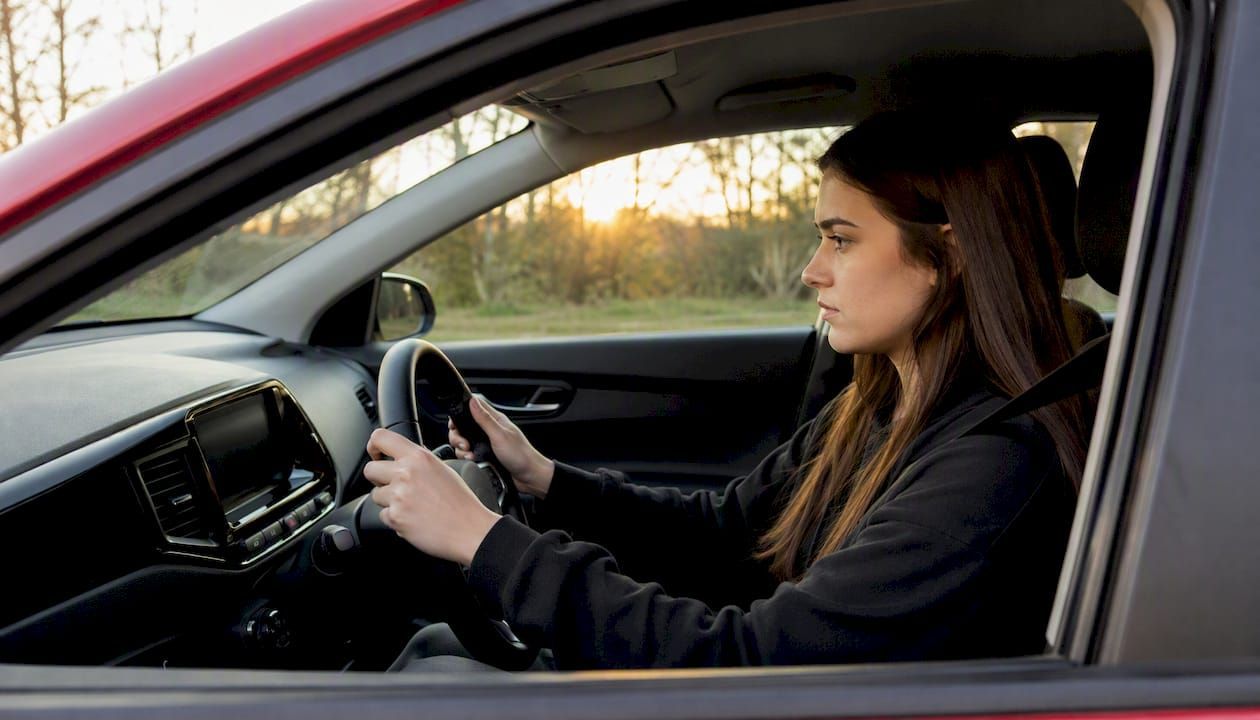
What the research on skill acquisition actually shows is that performance under pressure depends on practising the conditions of the test, not just the content. Watching 200 individual clips in isolation trains clip recognition. Running complete 14-clip timed tests trains concentration endurance, which is the thing that actually fails candidates in the room.
By clip 10 of a real test, a candidate who has only ever practised short drills is running on depleted focus. Their click timing slows, their peripheral scanning narrows, and they start waiting for obvious hazards rather than early ones. That is when the 5-point and 4-point windows close before they react.
Costello's instructors see this pattern consistently. Learners who arrive having scored well on short drills but never completed a full mock often underperform on test day, while those who have run five or six full timed sequences tend to find the real test feels shorter and less pressured than practice. The mock driving test guide covers the same principle for the practical test: simulating the full experience is what converts preparation into performance.
There is also a subtler point about early recognition. Candidates who practise only on low-quality or CGI clips develop a slightly wrong mental model of what a developing hazard looks like. Real DVSA footage has the texture and ambiguity of actual roads. Practising on it means your instincts are calibrated to the right signal, not a tidied-up simulation.
Costello's Driving School supports your full theory preparation
Passing the hazard perception section is not just about clicking at the right moment. It is about building the road awareness that makes those clicks instinctive, and that is where instructor-led preparation makes a measurable difference.
Costello's Driving School offers combined theory and hazard perception support across Essex, Suffolk, and East London, with DVSA-approved instructors who use real-world hazard scenarios during lessons to reinforce the same early-recognition skills the test measures. Rather than practising in isolation, learners who take lessons alongside their theory revision develop genuine hazard awareness, not just test technique. The school's Guaranteed Pass packages and driving lessons are available across Chelmsford, Colchester, Ipswich, Hornchurch, and East London. To find out which package fits your timeline, visit Costellosdriving and get in touch with the team directly.
Sources
The following official and reputable UK resources are worth bookmarking as you prepare:
Recommended