What Is The Pass Rate To Qualify As A Driving Instructor
So What are the Pass Rates? - Is it difficult to qualify?
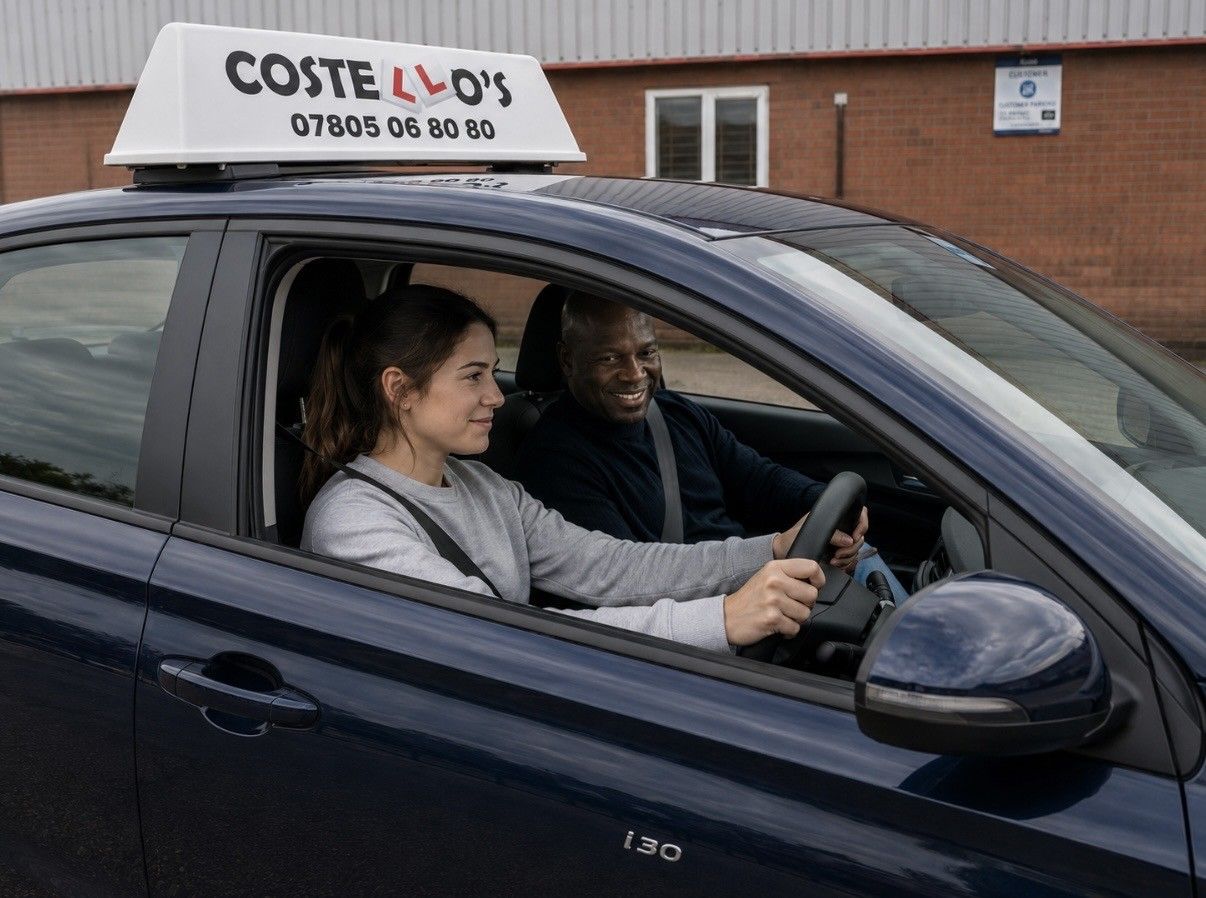
Becoming a driving instructor can lead to a flexible and rewarding career, but the qualification process is challenging. To join the register of approved driving instructors (ADIs), you must pass three separate Driver and Vehicle Standards Agency (DVSA) tests: Part 1, Part 2 and Part 3.
So, what are the pass rates—and how difficult is it to qualify?
The latest DVSA figures cover the financial year from April 2025 to March 2026. They show that the national pass rate for the final ADI Part 3 test was just 27.8%. That means fewer than three out of every ten Part 3 tests resulted in a pass.
The three tests needed to become a driving instructor
ADI Part 1: Theory and hazard perception
Part 1 tests your knowledge of road procedures, traffic signs, driving law, instructional techniques and related subjects. It also includes a hazard-perception assessment.
In 2025/26, 31,081 Part 1 tests were conducted across Great Britain and 11,512 were passed. This produced a national pass rate of 37.0%.
ADI Part 2: Driving ability
Part 2 is an advanced practical driving test. Candidates need to demonstrate a high and consistent standard of driving, sound judgement, effective observation, good planning and safe control of the vehicle.
In 2025/26, 13,605 Part 2 tests were conducted and 7,529 were passed. The national pass rate was 55.3%.
ADI Part 3: Instructional ability
Part 3 is the final qualifying test and assesses your ability to deliver a safe, effective and client-centred driving lesson to a real pupil.
You are assessed in three main areas:
- lesson planning
- risk management
- teaching and learning strategies
In 2025/26, 13,606 Part 3 tests were recorded nationally and 3,784 resulted in a pass. The national pass rate was 27.8%.
Latest national ADI pass rates
ADI testTests conductedTests passedPass ratePart 1 – theory and hazard perception31,08111,51237.0%Part 2 – driving ability13,6057,52955.3%Part 3 – instructional ability13,6063,78427.8%
These figures are pass rates for individual test attempts, not the percentage of people who eventually qualify. Candidates may take more than one attempt, so the three percentages should not be multiplied together to calculate an overall qualification rate.
ADI Part 3 pass rates at Essex test centres
Part 3 results vary considerably between test centres. The latest DVSA test-centre data covers April 2025 to March 2026.
Essex test centreADI Part 3 pass rateSouthend-on-Sea60.0%Basildon47.8%Chelmsford41.4%Tilbury31.0%Colchester28.6%Loughton28.6%Brentwood22.2%
The national Part 3 pass rate for the same period was 27.8%.
Clacton-on-Sea is not listed in the 2025/26 results table. Its most recently published centre result is 55.6% for 2024/25. DVSA may suppress test volumes and pass totals at individual centres where releasing them could identify an examiner or candidate. For that reason, the latest table publishes a pass-rate percentage for several Essex centres without showing the number of tests taken or passed.
It is also worth remembering that test-centre percentages can be affected by relatively small numbers of tests. A higher centre pass rate does not necessarily mean the test is easier, and every Part 3 test is assessed against the same national standard.
Why is the ADI Part 3 pass rate so low?
Part 3 is not simply a test of whether you can explain how to drive. Candidates must show that they can identify the pupil’s needs, agree a suitable lesson plan, adapt their teaching and manage risk throughout a real lesson.
Common reasons candidates struggle include:
- choosing a lesson that does not properly match the pupil’s needs
- giving too much instruction instead of encouraging the pupil to think
- failing to identify developing risks early enough
- not adapting the lesson when the pupil makes repeated mistakes
- asking questions without using the pupil’s answers to guide the lesson
- allowing the lesson to become instructor-led rather than client-centred
- giving an unclear or rushed recap at the end
The examiner looks at the complete lesson. A polished briefing alone will not compensate for weak risk management or a failure to help the pupil learn.
Does the test centre you choose affect your chance of passing?
Your chosen area can influence the types of roads, junctions and situations encountered during the lesson, but the assessment standard does not change. Choosing a centre purely because it has a higher published pass rate is therefore unlikely to be the best strategy.
It is more important to:
- know the local area well enough to select routes that suit the pupil and lesson goal
- prepare for different traffic conditions and levels of complexity
- develop a flexible, client-centred teaching style
- practise spotting and responding to risk before it becomes critical
- take an honest mock Part 3 assessment before booking the test
How long do you have to qualify?
After passing ADI Part 1, you have two years to pass Parts 2 and 3. If you do not complete the process within that period, you will normally need to start again from Part 1.
Once you have passed Part 2, you can choose to apply for a six-month trainee driving instructor licence. This can give you valuable experience teaching real pupils while continuing your Part 3 training, although holding a trainee licence does not guarantee a pass.
Can the right training improve your chances?
The national figures show that Part 3 demands thorough preparation. Effective training should go beyond rehearsed lesson plans and help you understand why you are making each teaching decision.
At Costellos Driving School, our instructor training focuses on practical, real-world development, including lesson planning, client-centred learning, risk management, fault analysis, questioning techniques and realistic Part 3 preparation.
If you are considering becoming a driving instructor in Essex, contact Costellos Driving School to find out more about our instructor-training options and the support available throughout the qualification process.
Frequently asked questions
What is the current ADI Part 3 pass rate?
The Great Britain ADI Part 3 pass rate was 27.8% in 2025/26, based on the latest DVSA annual data available.
Which Essex test centre had the highest Part 3 pass rate?
Among Essex centres with a published result for 2025/26, Southend-on-Sea had the highest rate at 60.0%. However, the current DVSA test-centre finder does not list Southend as offering ADI Part 3 tests, so candidates should check current availability before making plans.
Is Part 2 or Part 3 harder?
The pass-rate figures suggest Part 3 is the greater hurdle. In 2025/26, the Part 2 pass rate was 55.3%, compared with 27.8% for Part 3. The tests assess different skills, however, so both require dedicated preparation.
Can I qualify without using a trainee licence?
Yes. A trainee licence is optional. You can continue training and take Part 3 without holding one, although teaching experience can be valuable when it is properly supported and reviewed.
Are Part 3 tests easier at centres with higher pass rates?
No. All tests are assessed against the same DVSA standard. Local pass rates may fluctuate because of candidate preparation, the number of tests conducted and other factors. They should not be treated as a measure of how easy a centre is.
Sources and data note
Statistics are from the DVSA's official approved driving instructor qualifying-test data, tables DRT511A, DRT521A, DRT521C and DRT522B, updated in June and July 2026 with data to March 2026. Qualification-process information is from the official GOV.UK guide to the ADI Part 3 test.
DVSA notes that Part 3 data has an ongoing anomaly and is estimated to be 86% to 93% accurate. The figures are therefore useful as a guide but should not be interpreted as a guarantee of an individual candidate's result