Stop Stalling a Manual Car: 4 Instructor Drills for UK Learner Drivers
Stop Stalling a Manual Car: 4 Instructor Drills for UK Learner Drivers
To stop stalling, find the biting point, pause for a beat, then release the clutch smoothly while feeding in a little steady throttle. If you do stall, flick on your hazards if needed, pull the handbrake, shift to neutral and restart calmly. The drills, causes, and checks below help you fix the habit for good.
Key Points:
- Pause at the bite point, then release the clutch smoothly with steady throttle; lifting continuously through the bite is a common cause of repeat stalls.
- After a stall, use hazards if needed, apply the handbrake, select neutral, restart, check your surroundings, then choose first gear and move off smoothly.
- On hills, set the handbrake, select first, find the bite with gentle throttle, and release the brake only when the car wants to move forward.
- If stalls continue despite consistent clutch control, or coincide with rough idling, misfires, warning lights, or power loss, have a mechanic check the car.
- One stall without risk is usually a driving fault; repeated stalls, or one that makes another road user react, can be serious or dangerous.
Table of Contents
- Why stalls happen and where learners struggle most
- What to do straight after you stall
- Mastering clutch and throttle timing
- Drills that build real clutch confidence
- When stalling means you need a mechanic
- How stalling affects your driving test
- Instructor cues that fix stalling fast
- Keeping calm when you stall
- Stalling in rain, cold and on icy hills
- A word on patience with stalling
- Practise stalling fixes with a structured lesson plan
- FAQ
- Sources
Why stalls happen and where learners struggle most
Most stalls come down to timing rather than bad luck. The clutch and throttle have to work together, and when one moves faster than the other, the engine loses the power it needs to keep running. Human error, specifically poor clutch control and selecting the wrong gear, is the most common cause of stalling in manual cars, according to RAC Drive.
A handful of technique errors show up again and again:
- Releasing the clutch too fast before the engine has picked up enough revs.
- Forgetting the throttle entirely and relying on the clutch alone to move off.
- Selecting second gear instead of first, which asks the engine to do more work than it can manage from a standstill.
- Coasting in neutral then dumping the clutch back in too abruptly.
- Rushing the bite point because you are anxious about the car behind you.
Mechanical faults cause stalls too, though less often than technique. Worn spark plugs, a clogged fuel filter, a failing fuel pump or a tired battery can all starve the engine of what it needs to keep turning over, and these usually show up as rough idling, misfiring or sluggish acceleration alongside the stalling, as RAC Drive notes.
Certain situations trip learners up more than others: moving off from a standstill, junctions where you are watching for gaps in traffic, hill starts where gravity is working against you, stop-start traffic where you are constantly repeating the clutch routine, and unfamiliar cars where the bite point sits in a different place to the one you have practised in.
What to do straight after you stall
A stall feels worse than it is. The engine cutting out is not dangerous in itself, but how you handle the next few seconds matters, particularly in traffic or on a slope.
- Put your hazards on if you have stalled somewhere that could catch other drivers off guard, such as a junction.
- Apply the handbrake, especially on any kind of slope, to stop the car rolling.
- Shift into neutral and press the clutch fully.
- Restart the engine.
- Check your mirrors and surroundings before doing anything else.
- Select first gear.
- Find the bite point again and move off smoothly.
RAC Drive sets out this same order: stay calm, apply the handbrake and hazards, then restart and check your surroundings before rejoining traffic. On a hill, the handbrake is doing the job gravity would otherwise do to you: it holds the car still while you reset, so you are not trying to balance clutch, throttle and brake all at once under pressure.
Pro Tip: If the engine won't restart after two or three attempts, or the stall was accompanied by a warning light, pull over safely where you can and call for breakdown assistance rather than repeatedly cranking the starter.
Most stalls need nothing more than this sequence and a few seconds. Repeated stalling in the same spot, though, is usually a sign to go back to basics on technique rather than push through.
Mastering clutch and throttle timing
The biting point is the moment the clutch plate starts to touch the flywheel and the engine begins transferring power to the wheels, a concept explained further in our automatic gearbox types explained: a UK driver's guide. You will feel the car's nose dip slightly and hear the engine note drop a touch as it takes on load. That dip and that sound are your two cues, and learning to recognise both is more useful than watching the pedal.
Once you feel the bite, pause. Holding the clutch steady at that point for a moment, rather than continuing to lift it, gives the engine time to settle into carrying the car's weight before you ask for more. Background teaching practice built around this pause, using the engine note as the cue, tends to build competence faster than long drives that mix several skills at once. From there, release the rest of the clutch slowly and evenly rather than in one movement.
Throttle input should mirror the clutch: small and steady, not a sudden stab. A burst of revs followed by a slow clutch release is one of the most common mismatches that ends in a stall, because the two pedals are moving at different speeds. TheoryPass recommends releasing the clutch progressively and avoiding coasting in neutral, pairing it with a gear that actually matches your road speed.
A few habits to build into every move-off:
- Press the clutch down fully before the car comes to a complete stop, so you are never caught in gear with no clutch pressure.
- Feed the throttle in gradually from the moment you feel the bite, not before and not after.
- Keep your foot still at the bite point rather than drifting it up out of nerves.
- Match your gear to your speed: too high a gear at low speed asks for more than the engine can give.
Rev-matching, where you blip the throttle to raise engine speed before a gear change, is a more advanced technique and not something you need as a beginner. IAM Bristol describes it as a smoothness technique for later once your basic clutch control is solid, and trying it too early tends to add complexity rather than remove it.
The most common timing error is releasing the clutch at a steady rate all the way through the bite, rather than pausing once you reach it. Fixing that single habit solves a large share of ongoing stalls.
Pro Tip: Practise finding the bite point with the handbrake on and the car stationary before you try it while moving. You will feel the engine note change without any risk of rolling anywhere.
Drills that build real clutch confidence
Clutch control is a physical skill, and physical skills improve through repetition, not explanation. These four drills, done in order with an instructor, build the habit in stages.
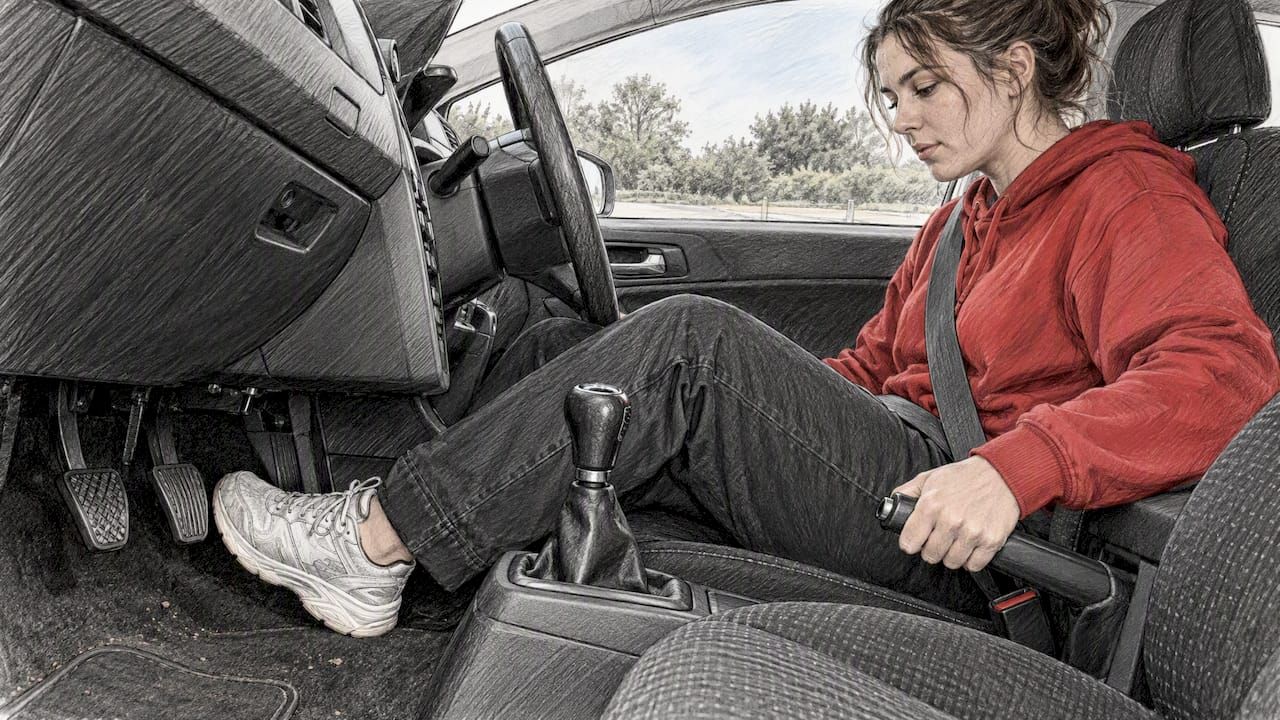
- Find and hold the bite. With the handbrake on, in first gear, lift the clutch slowly until you feel the engine note dip. Hold it there for a few seconds, then press the clutch back down. Repeat until you can find it without looking at your feet.
- Short move-offs on flat ground. Release the handbrake, find the bite, pause, then release smoothly while feeding a little throttle. Move forward a short distance, stop, and go again. Focus only on the smoothness of the release.
- Walking-pace clutch control. Keep the car moving at a very slow, steady pace using only small clutch adjustments, with little or no throttle. This sharpens your feel for how much the clutch alone can do.
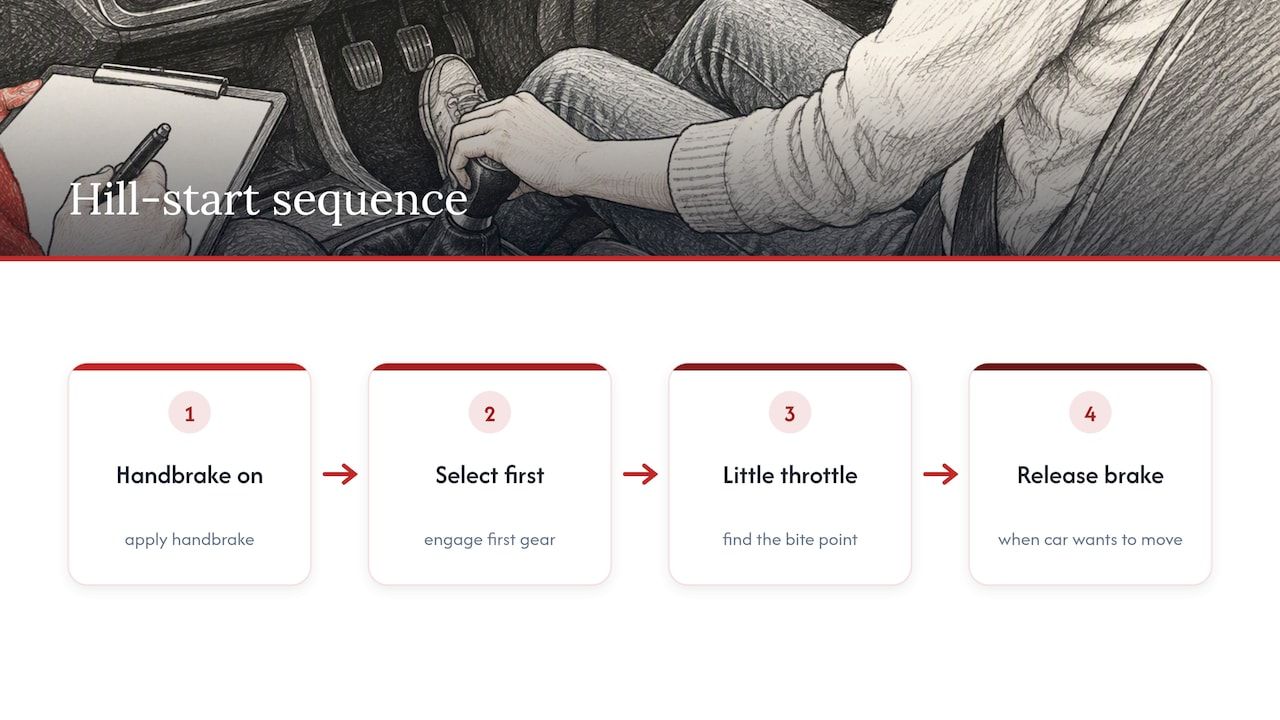
- Hill starts with the handbrake. On a gentle slope, set the handbrake, select first, find the bite while feeding a touch of throttle, and only release the handbrake once you feel the car wanting to move. This removes the rollback problem while you are still learning the sequence.
Once each drill feels comfortable, increase the slope, the distance and the unfamiliarity of the car. Moving from a flat car park to a gentle hill to a steeper one, and eventually to a car you have not driven before, is how the skill becomes automatic rather than something you have to think through each time.
When stalling means you need a mechanic
Not every stall is down to technique. If stalling is new, frequent, or happens even when your clutch control feels consistent, it is worth ruling out a mechanical cause before assuming you are doing something wrong.
Watch for these signs alongside the stalling:
- A rough or uneven idle when the car is stationary.
- Misfiring, felt as a jolt or stumble while driving.
- Dashboard warning lights appearing around the same time as the stalls.
- A sudden loss of power that was not there before.
The AA suggests checking spark plugs, coils and fuel delivery first when stalling is otherwise unexplained, alongside the fuel filter, air filter, battery and charging system. A worn clutch can also cause judder and stalling that has nothing to do with your technique. If stalling and juddering continue despite genuine improvement in your clutch control, RAC Drive points to clutch or flywheel wear as a likely cause, which means a garage visit rather than more practice.
Call for recovery if the engine won't restart, if a warning light is accompanied by unusual noise or smell, or if the stalling happens somewhere you cannot safely stop to investigate.
How stalling affects your driving test
A single stall that does not put anyone else at risk is normally recorded as a driving fault on the test report, which will not fail you on its own. Gov sets out that repeated stalling, or a stall that forces another road user to react, can be marked as a serious or dangerous fault instead.
Examiners are watching for the full sequence around a stall, not just whether it happens: correct use of mirrors, signal and manoeuvre, no rolling back on hills, and a controlled, deliberate move-off in the right gear.
Practice that targets test-specific risk is worth prioritising in your final weeks:
- Timed hill starts until the handbrake sequence is automatic.
- Controlled pull-ups and move-offs at junctions under time pressure.
- Full mock test routes with an instructor who flags stalls as they would be recorded.
Structured feedback and mock-test practice remain the fastest way to remove stalling risk before test day, a point echoed in GOV.UK examiner guidance on how faults get recorded.
Instructor cues that fix stalling fast
Instructors listen as much as they watch. A dropping engine note is the cue to pause at the bite, and a rising one with no movement means the throttle has outpaced the clutch. For hill starts, the standard instructor sequence is handbrake on, first gear selected, a little throttle while finding the bite, and only releasing the handbrake once the car visibly wants to move, which takes rollback out of the equation entirely.
Lessons tend to work best staged in short, repeated reps rather than one long drive: a few minutes on flat ground, then a gentle hill, then a busier road, each stage only added once the last one feels steady. Dual controls mean an instructor can intervene if a stall is about to happen somewhere awkward, which takes some of the pressure off trying to get it perfect first time.
Keeping calm when you stall
Stalling triggers an adrenaline spike out of proportion to the actual problem, particularly with other cars waiting behind you. That rush is usually what causes the next mistake, not the stall itself, because a rushed restart often means skipping a step or stabbing the throttle too hard.
A few mental habits help more than any pedal technique:
Treat a stall as data, not failure. It tells you something about the timing of that particular move-off, nothing more. Learners who stall often in the first few weeks and then settle into consistency are following the normal pattern, not an unusual one.
Slow your breathing before you restart. A few seconds spent settling yourself costs you almost nothing and prevents the rushed restart that often causes a second stall straight after the first.
Remind yourself that other drivers see this constantly and are rarely as bothered as it feels in the moment. The perceived judgement is almost always larger than the real one.
Separate the emotional reaction from the mechanical fix. Once the engine is off, the car is safe. There is no need to rush the restart faster than you can do it correctly.
Stalling in rain, cold and on icy hills
Weather changes the margin for error, even though the clutch technique stays the same. In the rain, wet road surfaces mean any rollback on a hill start happens faster and further, so leaning on the handbrake rather than trying to balance the clutch against gravity matters more than usual. Visibility and spray from other vehicles can also add pressure that rushes your pedal work, so slowing your own pace matters as much as the technique itself.
Cold mornings bring a different problem: the engine itself. A cold engine can idle lower and feel less responsive for the first few minutes, which means the bite point can feel slightly different until things warm up. Give it a moment after starting rather than pulling away immediately.
Icy hill starts are the most demanding combination. The handbrake sequence, set handbrake, select first, find the bite with a little throttle, release handbrake only once the car wants to move, matters most here because any attempt to hold the car on the clutch alone risks wheel spin or rollback on a slippery surface. Smaller, gentler throttle inputs than you would use on a dry day reduce the risk of the wheels losing grip the moment the clutch bites.
In every weather condition, the recovery sequence after a stall stays the same: hazards if needed, handbrake, neutral, restart, check, move off. Conditions change how much margin you have, not the steps themselves.
A word on patience with stalling
Nearly every learner stalls often in the first few weeks, then far less once the bite-point pause becomes automatic. That pattern holds across most learners we have worked with: frequent stalls, then a few focused sessions on the drills above, then real consistency. Structured practice and honest feedback from whoever is teaching you get you there faster than hoping it clicks on its own.
— Dean
Practise stalling fixes with a structured lesson plan
Fixing a stalling habit is faster with someone watching your feet and calling the correction in real time, which is exactly what our manual lessons are built around at £37 to £38 an hour. We use dual-controlled cars, so an instructor can step in before a stall turns into a stressful moment, and lessons are staged from flat-ground bite-point drills through to hill starts and busier roads at your own pace.
If stalling keeps happening around specific situations such as roundabouts, hill starts or heavy traffic, our driveability lessons focus specifically on those trickier scenarios rather than general driving practice. For learners who want to fix the habit quickly ahead of a test date, our intensive driving courses compress the same structured drills into a shorter run of lessons, and our Guaranteed Pass course at £2,200 builds in the control work alongside full test preparation.
A typical lesson addressing stalling includes:
- Bite-point drills on flat ground before anything involving traffic or hills.
- Short, repeated move-offs with feedback on throttle and clutch timing.
- A hill-start routine using the handbrake to remove rollback from the equation.
- Gradual exposure to busier roads once the basics feel consistent.
Get in touch through our driving lessons page to book a session and start working on this with an instructor.
FAQ
Why does my car stall when I accelerate?
Stalling while accelerating usually means the clutch came up faster than the throttle was applied, so the engine lost power before it had enough revs to cope. Selecting too high a gear for your speed causes the same problem, since the engine is being asked to do more work than it can manage.
What is the correct way to drive a manual car?
The core routine is clutch down, select the right gear for your speed, find the biting point, pause briefly, then release the clutch smoothly while feeding in a little steady throttle. TheoryPass adds that braking should handle speed changes, with the clutch pressed before the engine struggles rather than after.
How to avoid stalling on hills in a manual car?
Set the handbrake, select first gear, and find the bite point while feeding a little throttle, then only release the handbrake once you feel the car wanting to move forward. This sequence removes rollback from the equation entirely, which is the main reason hill starts feel harder than flat ground.
Can a bad spark plug cause stalling?
Yes, worn spark plugs can cause stalling, usually alongside rough idling or misfiring rather than on their own. The AA recommends checking spark plugs and ignition components first when stalling happens without an obvious technique cause.
Sources