Pass Your UK Driving Test First Time: Drill Junction and Mirror Checks
Pass Your UK Driving Test First Time: Drill Junction and Mirror Checks
The learners who pass first time are the ones who master junction observations, pass theory and hazard perception comfortably before booking their practical, drill mirror-signal-manoeuvre until it is automatic, rehearse the show me/tell me questions, and run proper mock tests with an instructor. The national pass rate sits at 48.9%, which means over half of candidates fail, usually on the same handful of avoidable faults.
Key Points:
- The theory test requires 43 out of 50 on multiple choice and 44 out of 75 on hazard perception; both sections must be passed.
- At junctions, check mirrors and blind spots, then make a visible head turn before committing to a gap.
- Timed mock papers with official DVSA materials and focused review of weak clips help prepare; hazard responses cannot be changed once submitted.
- A wrong answer to either vehicle safety question is a minor fault, but failing the 20 metre eyesight check ends the test before driving.
- A realistic mock should use unfamiliar routes, no instructor prompts, and silent fault marking; review repeated errors afterward for targeted practice.
Table of Contents
- 1. Top practical tips: core skills to master before your test
- 2. Theory and hazard perception: pass marks and revision tactics
- 3. In-car routines examiners want to see: mirrors, signals, positioning and speed
- 4. Manoeuvres and vehicle control: concise drills to build consistency
- 5. Show me/tell me vehicle safety questions and the eyesight check
- 6. Test day checklist and managing nerves
- 7. Mock tests and instructor feedback: closing the remaining gaps
- Why confidence matters as much as skill
- How Costello's Driving School gets you ready for test day
- FAQ
- Sources
1. Top practical tips: core skills to master before your test
Most test failures trace back to a small set of repeatable mistakes rather than bad luck or a harsh examiner. The top 10 reasons for failing list junction observations, mirror use when changing direction, and unsafe moving off as the three most common faults, so these deserve the bulk of your practice time before test day.
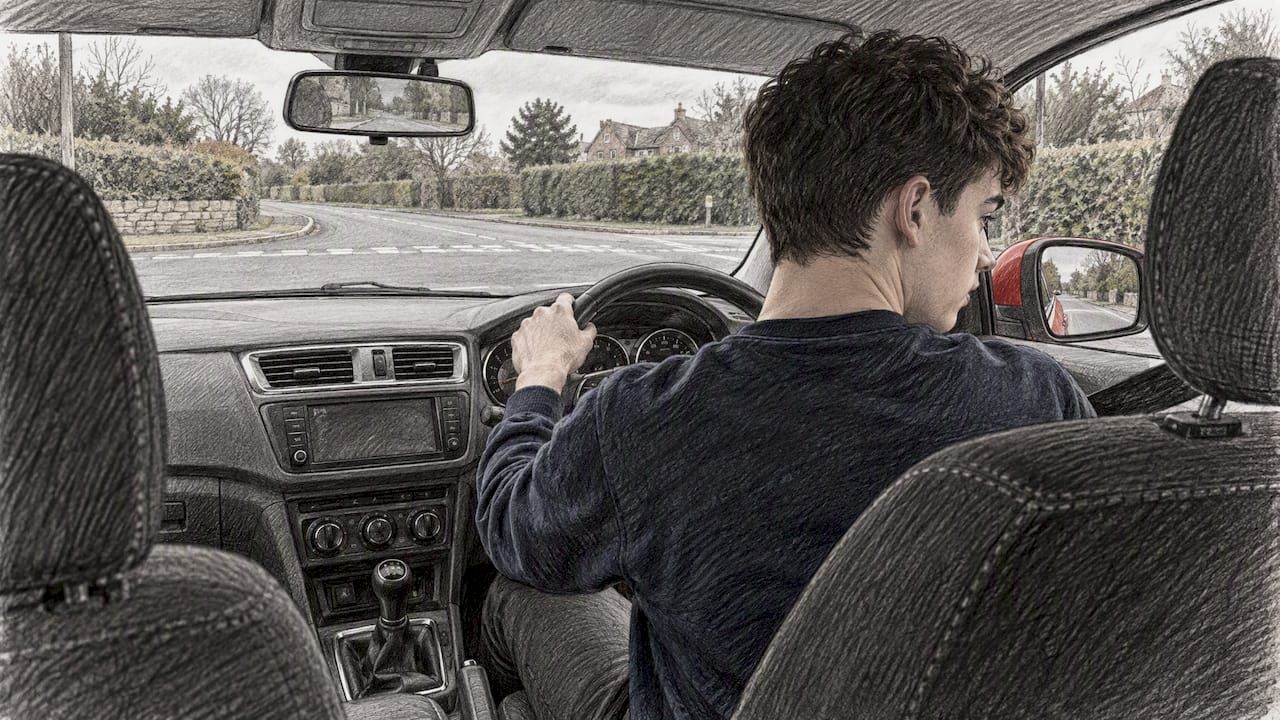
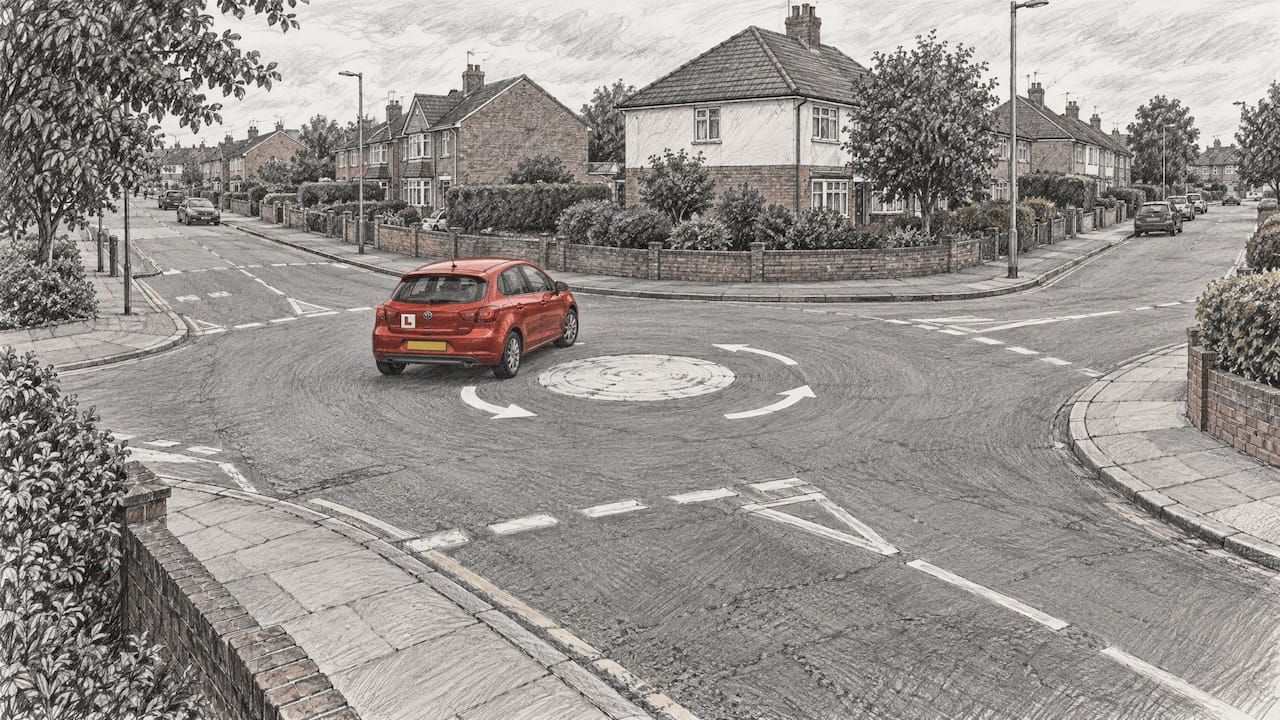
A junction scan routine works best when you break it into a fixed sequence: mirrors, blind spot over your shoulder, a visible head turn into the junction, then a second check before you commit to the gap. Examiners cannot read your intentions, only your actions, so a deliberate head movement matters as much as the decision itself.
Build your practice around this weekly structure:
- Session one : junction observations only. Practise the mirror-shoulder-head sequence at ten different junctions, varying the type (T-junctions, crossroads, roundabouts).
- Session two : mirror-signal-manoeuvre repetitions. Call out "mirror, signal, manoeuvre" aloud before every lane change, turn or stop until it becomes reflexive.
- Session three : moving off safely. Repeat the full check (mirror, blind spot, signal if needed) from parked positions on both flat and inclined roads.
- Session four : a short mock drive combining all three, with your instructor marking faults silently so you get an honest read on progress.
Pro Tip: Narrate your checks out loud during practice sessions. Saying "mirror, signal, manoeuvre" forces the sequence into muscle memory faster than silent repetition.
2. Theory and hazard perception: pass marks and revision tactics
You need 43 out of 50 on the multiple-choice section and 44 out of 75 on hazard perception to pass the theory test, and both parts must be passed together to receive your certificate. There is no partial credit between sections, so a strong multiple-choice score will not rescue a weak hazard perception result.
Efficient revision beats long, unfocused sessions:
- Work through timed mock papers under real exam conditions rather than casual question banks.
- Use official DVSA materials and apps rather than third-party guides, since question wording and style match the real test more closely.
- Run short, focused hazard perception clinics of 15 to 20 minutes, reviewing clips where you scored low rather than repeating ones you already handle well.
- Treat the hazard perception test seriously: it uses 14 video clips with at least one developing hazard each, scoring up to five points per hazard, and you cannot review or change your responses once given.
Delay booking your practical test until you are passing mock theory papers comfortably, ideally scoring several points above the pass mark. Rushing into practical lessons before theory is secure often means relearning observation habits later, which wastes lesson time you have already paid for.
3. In-car routines examiners want to see: mirrors, signals, positioning and speed
Examiners assess decision-making as much as physical control, and the clearest way to demonstrate safe decisions is through visible, consistent routines. Junction observations should include a genuine head turn, not just a glance at the mirror, since the top 10 fail reasons identify junction observation faults as the single most common cause of failure, often because learners rely on mirrors alone when a mirror cannot cover the blind spot at a junction.
Apply mirror-signal-manoeuvre with consistent timing:
- Check mirrors early enough that you have time to react to what you see, not as an afterthought right before turning.
- Signal with enough notice for following traffic to react, but not so early that it creates confusion at a junction with multiple turning options.
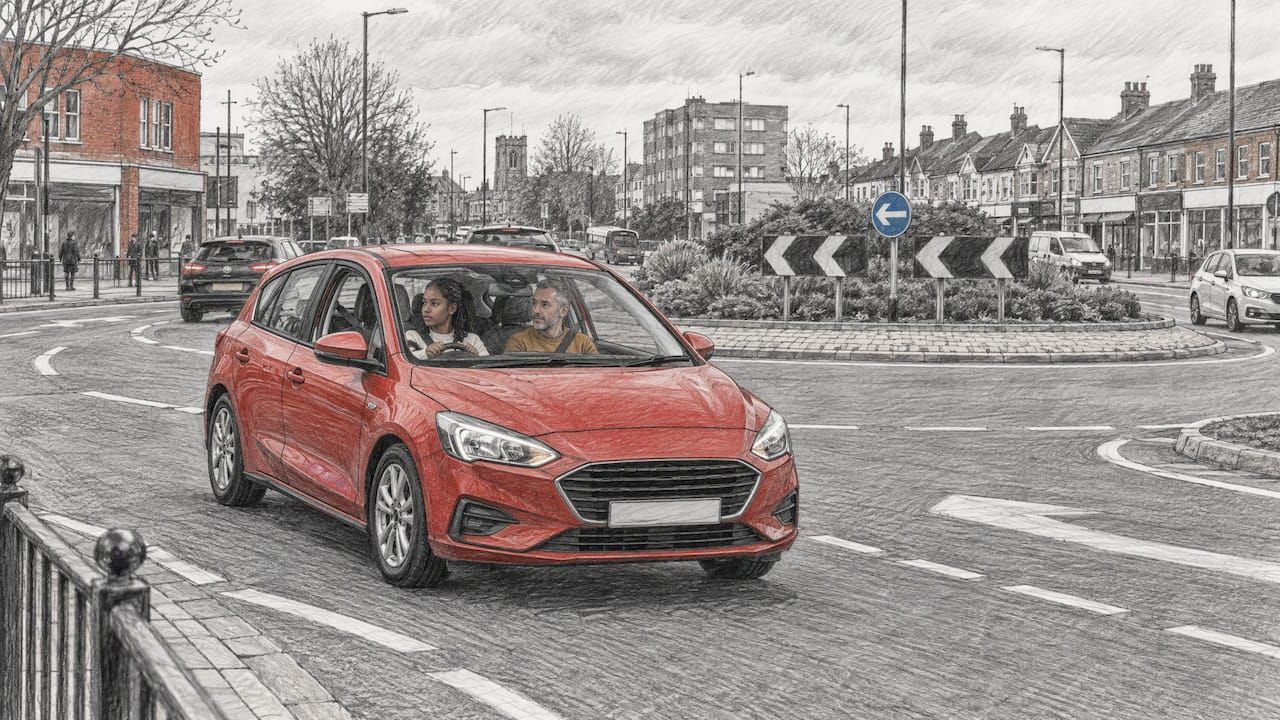
- Confirm your gap is genuinely safe before committing to a roundabout or turn, rather than moving on the signal alone.
Road positioning and speed selection are separate fault categories but closely linked in practice. Keep a steady position within your lane, adjusting only for parked cars, cyclists or road narrowing, and choose a speed that suits the road's character rather than simply the posted limit.
Pro Tip: If you are ever unsure whether you have left enough of a gap, ease off slightly and lengthen it. Examiners mark hesitation far more leniently than they mark unsafe assumptions.
4. Manoeuvres and vehicle control: concise drills to build consistency
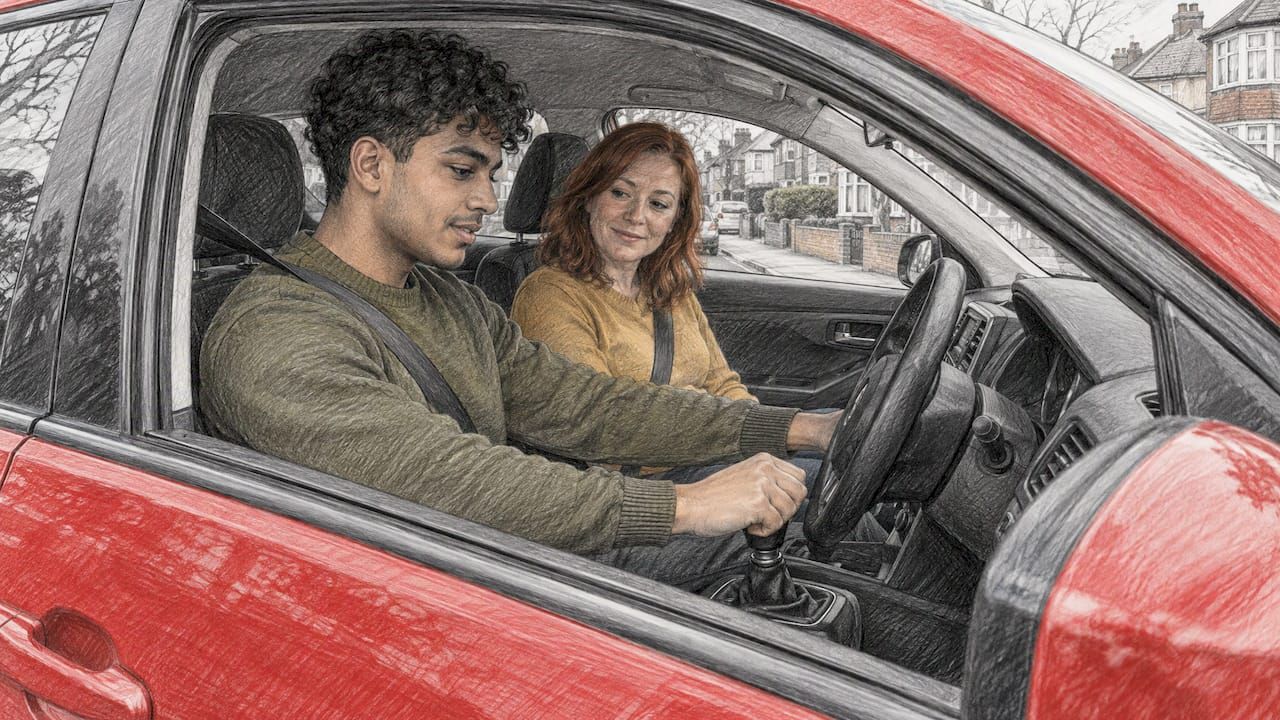
Consistency in basic control skills frees up mental capacity for observation and decision-making during the test. Before moving off, run through seat position, mirror adjustment and clutch bite point every single time, even in a familiar car, so the habit holds under pressure on test day.
- Bay parking : practise approaching at a slow, controlled speed, checking all-round observation before and during the manoeuvre, and aim for ten repetitions before attempting it under mock test conditions.
- Reversing around a corner : focus on maintaining a steady slow speed with constant observation through the rear window and mirrors, adjusting your steering input rather than stopping to correct.
- Turning in the road : practise the full lock-to-lock steering with observation checks at each phase, repeating until the manoeuvre feels unhurried rather than rushed.
- Agree a repetition target with your instructor for each manoeuvre, since the right number varies depending on how quickly you build confidence with clutch control and spatial awareness.
If one manoeuvre consistently causes problems after several attempts, ask your instructor for a concentrated remedial session focused only on that skill, rather than spreading practice thinly across everything in a single lesson.
5. Show me/tell me vehicle safety questions and the eyesight check
The practical test includes two vehicle safety questions: a "tell me" question asked before you start driving, and a "show me" question asked while you are driving. Getting either one wrong results in a minor fault rather than an automatic failure, so there is no need to over-worry about them, but rehearsing the common examples removes one source of nerves entirely.
Common examples worth practising in advance include:
- "Tell me how you would check the brakes are working before starting a journey."
- "Tell me how you would check the horn is working."
- "Show me how you would wash and clean the front windscreen."
- "Show me how you would demist the front windscreen."
Before you even start the car, you will face an eyesight check that requires reading a number plate from 20 metres. Failing this check ends the test immediately, before you have driven a single metre, so confirm you can manage this comfortably in daylight before you arrive rather than discovering a problem on the day.
6. Test day checklist and managing nerves
Arriving prepared removes avoidable stress before you have even met your examiner. Bring your photocard driving licence, evidence of your theory pass if required, and make sure your vehicle has valid insurance, tax and an MOT where applicable.
- Pack your photocard driving licence and any required theory test evidence the night before, not the morning of.
- Get a proper night's sleep and eat something light beforehand, since steady blood sugar and hydration help concentration and reaction times during the test.
- Arrive with time to spare rather than rushing straight from the car park into the test centre.
- Use slow, controlled breathing in the waiting area to settle your heart rate before your name is called.
Once in the car, run a quick personal checklist: seat, mirrors, seatbelt, handbrake. A single mental run-through in the same order every time reduces the chance of missing a step under pressure.
Pro Tip: Some learners swear by a banana or similar light snack beforehand, the idea being that steady blood sugar supports concentration. It is not a magic fix, but skipping breakfast entirely rarely helps your focus either.
7. Mock tests and instructor feedback: closing the remaining gaps
A proper mock test only works if it mirrors real exam conditions: timed, on varied routes you have not over-rehearsed, with no prompting from your instructor during the drive itself. GOV.UK guidance treats this kind of readiness check as the most reliable way to confirm you are ready to book.
- Ask your instructor to mark faults silently during the mock, then review them together afterwards rather than correcting you mid-drive.
- Keep a simple log of recurring faults across several mock tests, since a fault that appears once is noise but one that repeats needs targeted correction.
- Request specific remedial practice on recurring faults rather than generic extra lessons that spread time thinly.
- Let your instructor confirm you are ready before booking or rebooking. Their judgement, based on consistent fault-free mock drives, carries more weight than your own confidence alone.
Why confidence matters as much as skill
Most advice on passing first time focuses entirely on technical competence, but nerves undo technically capable learners more often than skill gaps do. A learner who can perform every manoeuvre perfectly in a calm lesson but freezes at a junction under test pressure fails for the same reason as someone who never learned the manoeuvre properly: the examiner cannot see a safe decision being made.
Confidence building deserves equal weight to drilling manoeuvres, particularly for nervous learners who benefit from lessons paced around their own comfort rather than a fixed syllabus. Tailored lessons, DVSA-approved instructors and structured intensive or Guaranteed Pass options exist precisely because a one-size approach does not suit every learner equally. Discuss your specific weak points honestly with your instructor rather than assuming more generic lessons will fix them.
— Dean
How Costello's Driving School gets you ready for test day
We teach manual and automatic lessons in various areas and have built our scheduling, including weekends and evenings, around learners who need flexibility rather than a fixed slot. Our manual and automatic lessons suit learners building skills steadily, while our Guaranteed Pass course gives you a structured, intensive route when you want to pass first time with less time spent waiting between lessons.
If nerves are holding you back more than skill, our driveability lessons are built specifically around confidence at your own pace. Get in touch to book a lesson or ask about the Guaranteed Pass course.
FAQ
What is the most common fail in a driving test?
The single most common fault category is junction observations, followed closely by mirror checks when changing direction and moving off unsafely, according to DVSA's top 10 reasons for failing. Practising a deliberate head-turn scan at junctions directly addresses the biggest single cause of failure.
How do I pass the UK theory test easily?
You need 43 out of 50 on the multiple-choice section and 44 out of 75 on hazard perception, and you must pass both parts to receive your certificate. Timed mock papers using official DVSA materials, combined with focused practice on hazard perception clips, give the most efficient route to both scores.
Why do people say to eat a banana before a driving test?
A light snack like a banana is commonly recommended because steady blood sugar can support concentration and steady reactions during a stressful test. It is not an official DVSA recommendation, just a practical habit some learners find helps them stay focused.
What is the UK driving test pass rate?
The national practical test pass rate in Great Britain was 48.9% for July to September 2024, based on 449,000 tests conducted in that period. That means slightly under half of candidates pass on any given attempt, which is why targeted practice on common fault areas matters more than general mileage.
What happens during the practical driving test?
The test includes an eyesight check, two vehicle safety questions, and an assessed drive covering manoeuvres and general road skills, as outlined in GOV.UK's guidance on what happens during the test. You must read a number plate from 20 metres before driving begins, and failing this check ends the test immediately.