Independent Driving Part: One Wrong Turn Won’t Fail UK Learners
Independent Driving Part: One Wrong Turn Won't Fail UK Learners
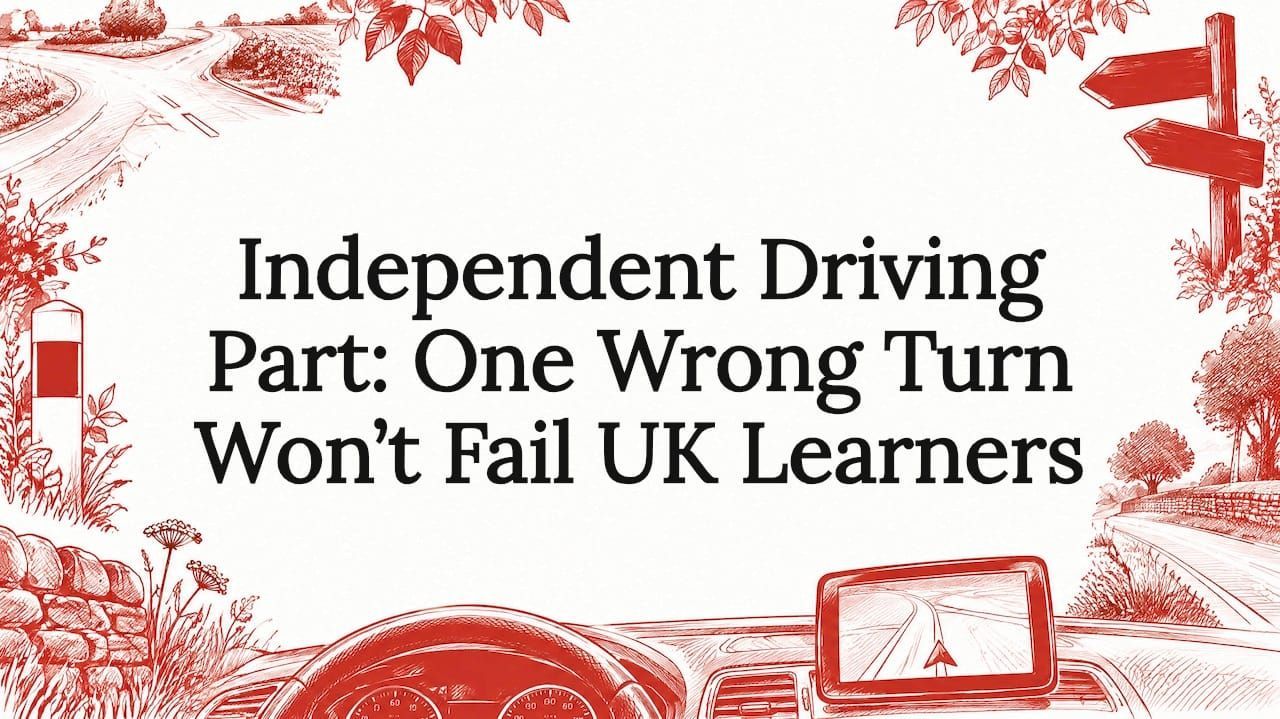
The independent driving part of your practical test is a continuous stretch where you follow either a sat nav set up by the examiner or a sequence of traffic signs, and you drive it without your own phone or device. The examiner is not testing your memory of the route. They are watching how safely and calmly you make decisions on your own.
Key Points:
- Examiners assess early hazard planning, consistent mirror, signal, manoeuvre checks, correct lane choice, and safe gaps, rather than route speed or memory.
- A wrong turn alone does not fail you; a fault arises only if you correct it unsafely, such as braking harshly or failing to observe.
- Practice on unfamiliar roads across several lessons in the weeks before your test, using sat nav only, signs only, and then a mixed route.
- With sat nav, listen to instructions and return your eyes to the road; with signs, read two or three ahead to avoid late lane changes.
- If a condition affects how you manage directions, request adjustments when booking; the examiner may offer fewer instructions, diagrams, or a choice of method.
Table of Contents
- What the independent driving part actually looks like on test
- What examiners are looking for (assessment criteria you can practise)
- Sat nav versus traffic signs: how each method feels and what to practise
- If you go wrong: staying safe and how the examiner will help
- How to prepare: specific mock drives and instructor-led drills
- Special needs and reasonable adjustments for independent driving
- Timing and test context: where independent driving sits in the practical test
- Costello's perspective: instructor approach to teaching independent driving
- How Costello's Driving School helps with tailored lessons and mock independent drives
- FAQ
- Sources
What the independent driving part actually looks like on test
Independent driving is built into the general driving section of the practical test, which usually runs for 35 to 60 minutes in total. Before this part starts, the examiner pulls up safely and briefs you on which method you will follow for that stretch.
There are two possible methods:
- Following a sat nav that the examiner provides and sets up for you.
- Following a sequence of traffic signs, with no sat nav involved.
Routes are never published in advance, so there is nothing to memorise beforehand. If you take a wrong turning, that alone will not fail you. What matters is how you handle the roads you are actually on, not whether you followed the examiner's intended path exactly.
What examiners are looking for (assessment criteria you can practise)
The examiner uses the independent driving section to watch for the same decision-making skills assessed throughout the rest of the test, just without turn-by-turn prompts from them. The focus is on how you read the road and respond, not on whether you find the quickest route.
Specifically, they are looking for:
- Planning ahead for junctions, lane changes and hazards before you reach them.
- Spotting hazards early and adjusting speed or position in good time.
- Using mirror, signal, manoeuvre (MSM) consistently, even when you are also thinking about directions.
- Applying position, speed, look (PSL) at junctions and bends.
- Choosing the correct lane and road position for where you are going.
- Keeping a safe speed and sensible gaps from other vehicles.
Pro Tip: Practise saying your MSM routine out loud as you approach each junction during lessons; it trains you to run the checks automatically, even when you are also working out where to go next.
Sat nav versus traffic signs: how each method feels and what to practise
Both methods test the same skills, but they load your attention differently, so it helps to practise each one on its own terms.
With the examiner's sat nav, the device sits on the dashboard and gives spoken directions along with a visual display. Glancing at it constantly is a mistake many learners make. Treat it the way you would treat a passenger giving directions: listen for the instruction, then keep your eyes back on the road well before the junction arrives.
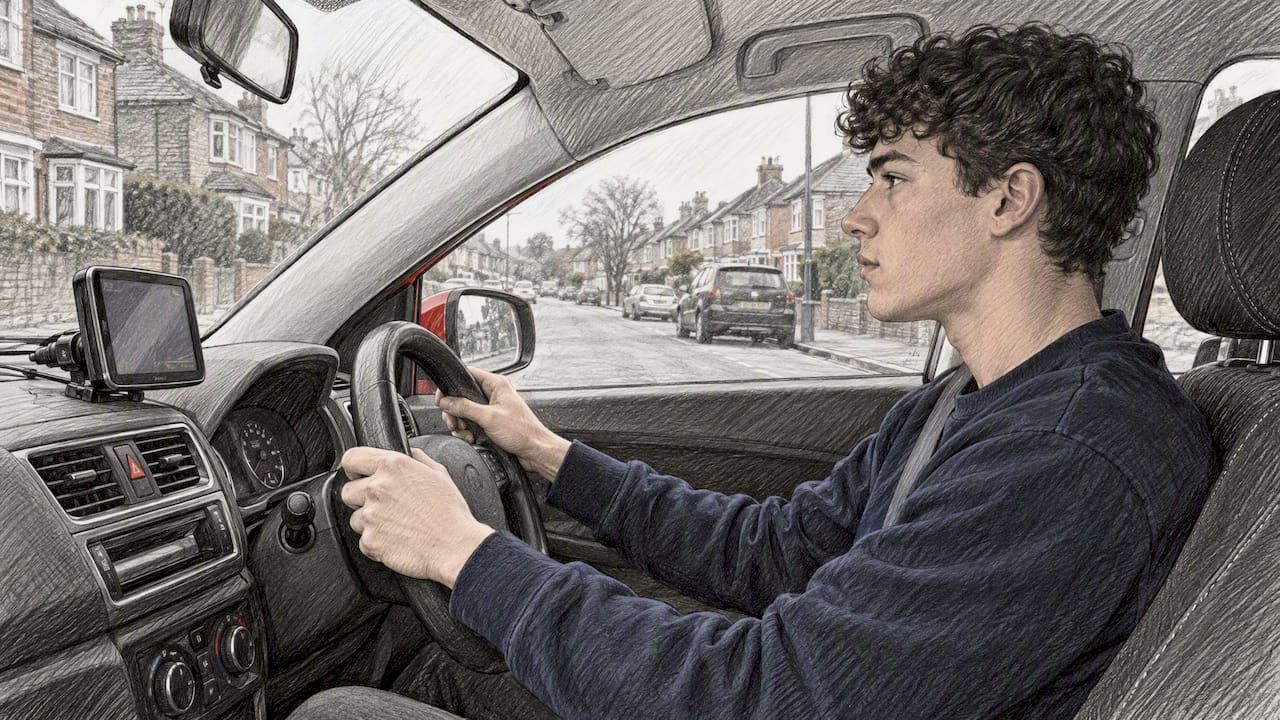
Following traffic signs asks for a different kind of attention. You need to read sign sequences early, often two or three signs in advance, so you are not making last-second lane decisions.
Useful drills to try with your instructor:
- Practise a route using only the sat nav, then repeat a similar route using only signs, so you notice the different attention demands.
- Call out upcoming signs or instructions before you act on them, to build the habit of reading ahead.
If you go wrong: staying safe and how the examiner will help
A wrong turning on its own does not fail your test. What counts against you is any driving fault you commit while you are correcting it, such as harsh braking or poor observation, not the fact that you went off the intended route.
If you realise you have gone off-route:
- Stay calm and keep driving safely rather than making a sudden correction.
- Continue following normal road rules and positioning as you would anywhere else.
- Wait for the examiner, who will give you fresh directions to rejoin the route once it is safe to do so.
Official guidance is clear that examiners will help you get back on track rather than penalise you for the detour itself. The same section also appears in several other practical tests, including motorcycle, LGV and PCV assessments, which all use the same principle.
How to prepare: specific mock drives and instructor-led drills
The most useful preparation is rehearsing the format of independent driving, not memorising any particular road. Ready to Pass? guidance recommends practising on unfamiliar roads specifically so you learn to plan and react, rather than recall.
A simple way to build this into lessons:
- Run a mock independent drive using sat nav only, on roads you have not driven before.
- Run a second mock drive using traffic signs only, on a different unfamiliar route.
- Run a mixed mock drive that switches between the two, mirroring how an examiner might brief you on test day.
Aim to repeat this cycle across several lessons in the weeks before your test, rather than cramming it into one session.
For the MSM and PSL side of things, a step-by-step drill works well:
- Identify the next decision point, such as a junction or roundabout, as early as possible.
- Check your mirrors.
- Signal when it is safe and appropriate to do so.
- Choose your position and execute the manoeuvre.
Pro Tip: Spacing shorter practice drives across several weeks tends to build steadier habits than one long intensive session, because it gives you repeated chances to apply the same routine on genuinely new roads.
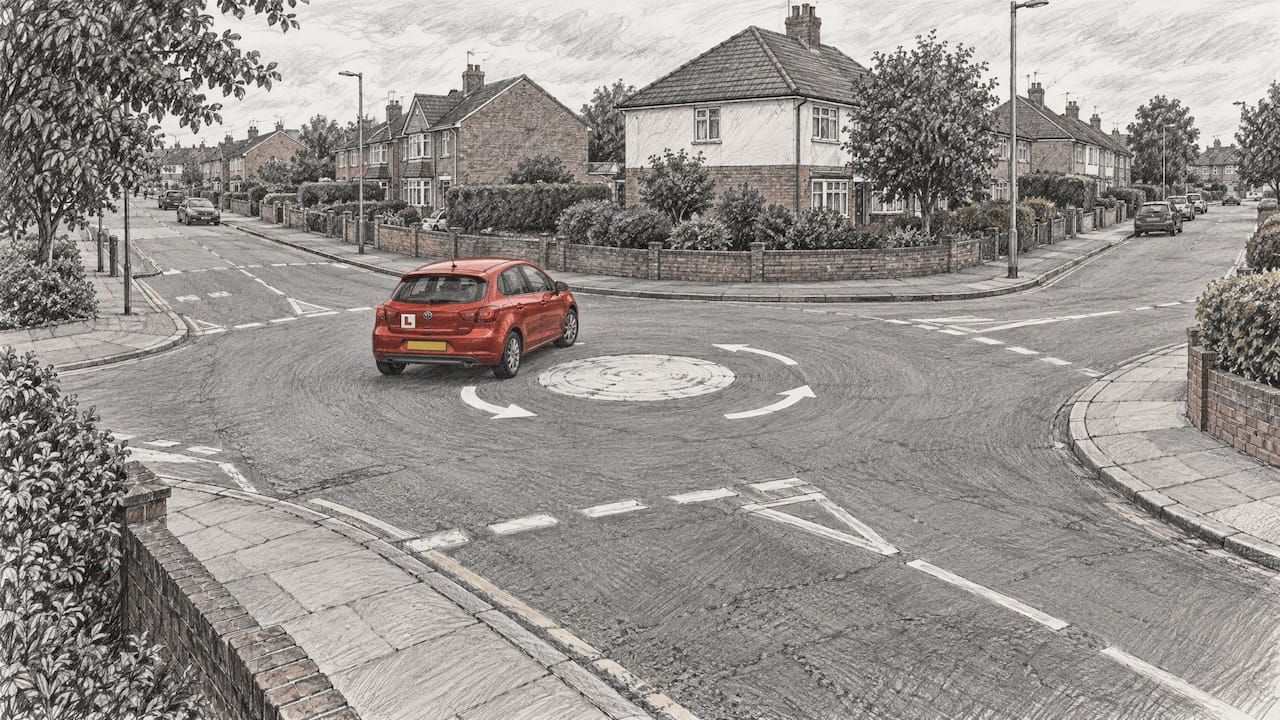
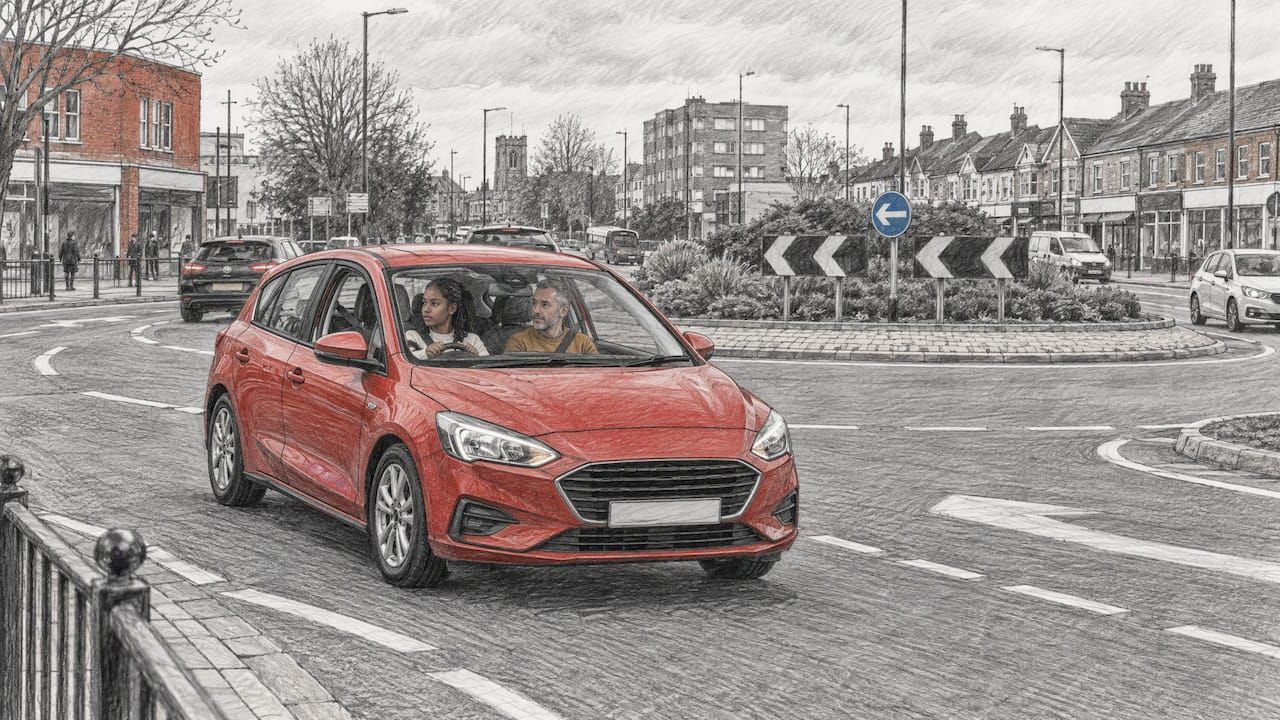
Roundabouts are a common sticking point during independent driving, since lane choice has to happen while you are also tracking directions; our roundabout positioning guide covers the lane and signalling rules in more detail.
Special needs and reasonable adjustments for independent driving
If you have a condition that might affect how you manage directions, mention it when you book your test so the examiner can plan adjustments in advance. Official DSA guidance sets out how examiners identify and respond to these needs.
Adjustments can include:
- Fewer spoken directions, given further apart.
- Diagrams instead of, or alongside, verbal instructions.
- Letting you choose whether you follow the sat nav or traffic signs, where this suits you better.
- Extra support for candidates with hearing or language differences, such as clearer pacing of instructions.
Examiners record the method used and adapt their briefing accordingly, so there is no need to worry about asking for support.
Timing and test context: where independent driving sits in the practical test
Independent driving sits within the general driving section of your test, alongside eyesight checks, "show me, tell me" questions and reversing manoeuvres. The examiner will tell you clearly when the independent driving section begins and again when it ends.
Keep your practice balanced across the whole test rather than over-focusing on independent driving alone; our automatic test preparation checklist is a useful reference for the other elements examiners assess.
Costello's perspective: instructor approach to teaching independent driving
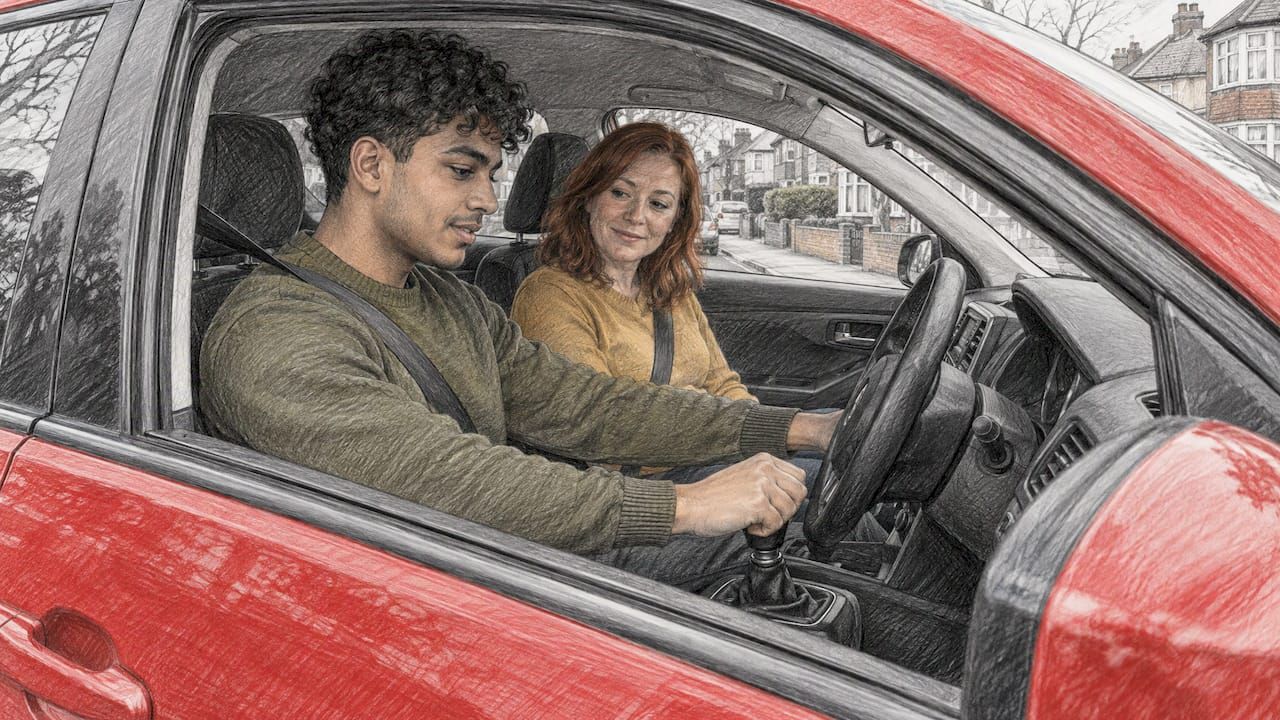
We build mock independent drives into lessons early, mixing sat nav only, signs only and combined briefings so learners meet every version an examiner might use. When a learner takes a wrong turn in practice, we keep the car moving and talk them through it calmly rather than stopping to correct it immediately, which mirrors exactly what a real examiner does.
With over 25 years of teaching across Essex, Suffolk and East London, our DVSA-approved instructors weave MSM and PSL drills into every independent-driving session, in dual-controlled cars that let us step in only when it genuinely matters.
— Dean
How Costello's Driving School helps with tailored lessons and mock independent drives
We know independent driving unsettles learners more than any other part of the test, so we build it into lessons from early on rather than leaving it until the last week. Our instructors run mock independent drives on roads you have not driven before, switching between sat nav and traffic sign briefings so nothing on test day feels unfamiliar.
Our services that support this directly:
- Manual and automatic lessons both include MSM and PSL drills woven into route-following practice: see our driving lessons page for current availability.
- Our Guaranteed Pass Course gives a structured run of lessons, including repeated independent-driving mock drives, aimed squarely at test readiness: details are on our Guaranteed Pass Course page.
- Driveability lessons are built for nervous learners who want extra confidence with independent decision-making before test day.
- Refresher training suits drivers returning after a break who need to rebuild route-planning habits.
Book a lesson through our driving lessons page and we will tailor your independent-driving practice to roads around Essex, Suffolk or East London.
FAQ
How long is the independent driving part on the test?
Independent driving forms part of the general driving section of the practical test, which typically lasts over half an hour in total. The examiner will tell you clearly when this section starts and finishes.
When can you legally drive alone in the UK?
You can drive unaccompanied once you have passed your practical test and hold a full UK driving licence. Before that, you must always be supervised by a qualified driver while practising, including during any independent-driving style practice sessions.
What are the new driving rules for 2026?
There is no published change to the independent driving section's format; the method still involves following either an examiner-provided sat nav or traffic signs. For the most current rules, check GOV.UK's driving test guidance directly.
Which city is the hardest to pass the driving test in?
Pass rates vary by test centre and region rather than by a single "hardest" city, and official figures are published per test centre rather than by overall difficulty ranking. Your best preparation is practising on the actual roads around your chosen test centre, including unfamiliar routes nearby.
What happens if I take a wrong turn during independent driving?
A wrong turning on its own will not fail you; only a driving fault committed while correcting it counts against you. The examiner will guide you back onto the route once it is safe to do so.
Sources
Recommended